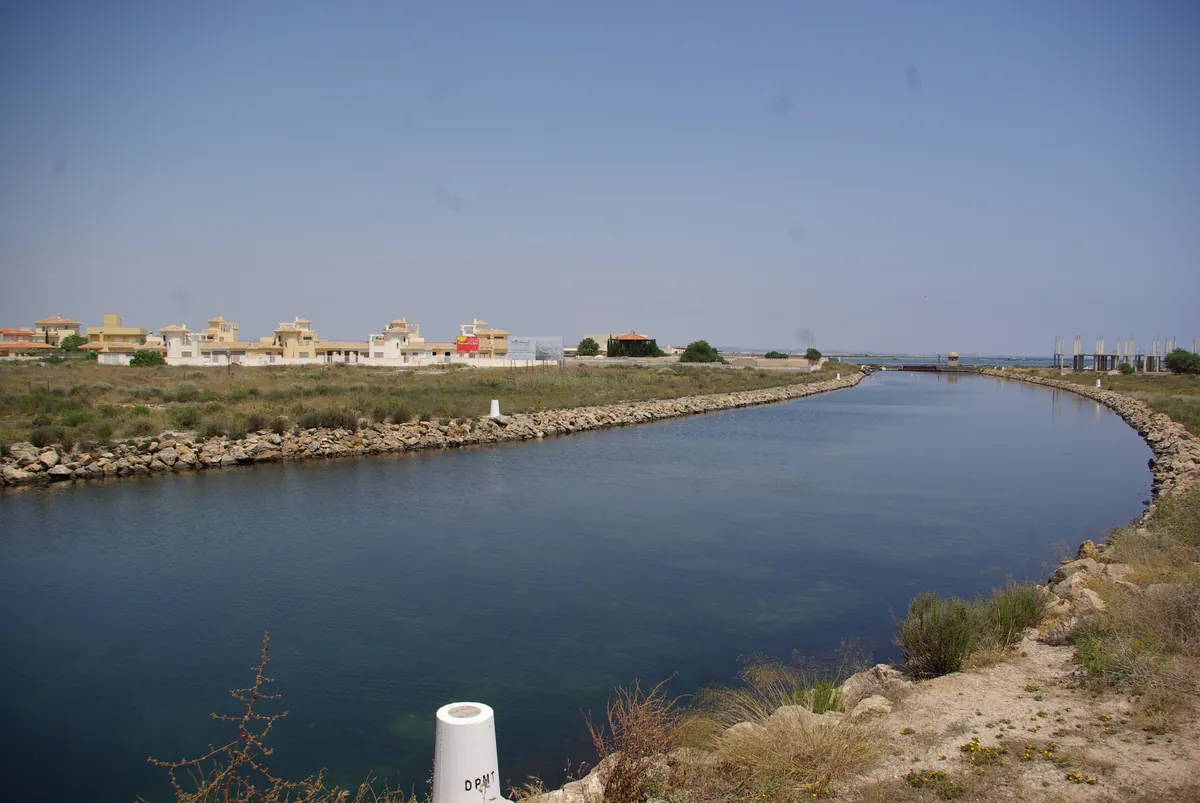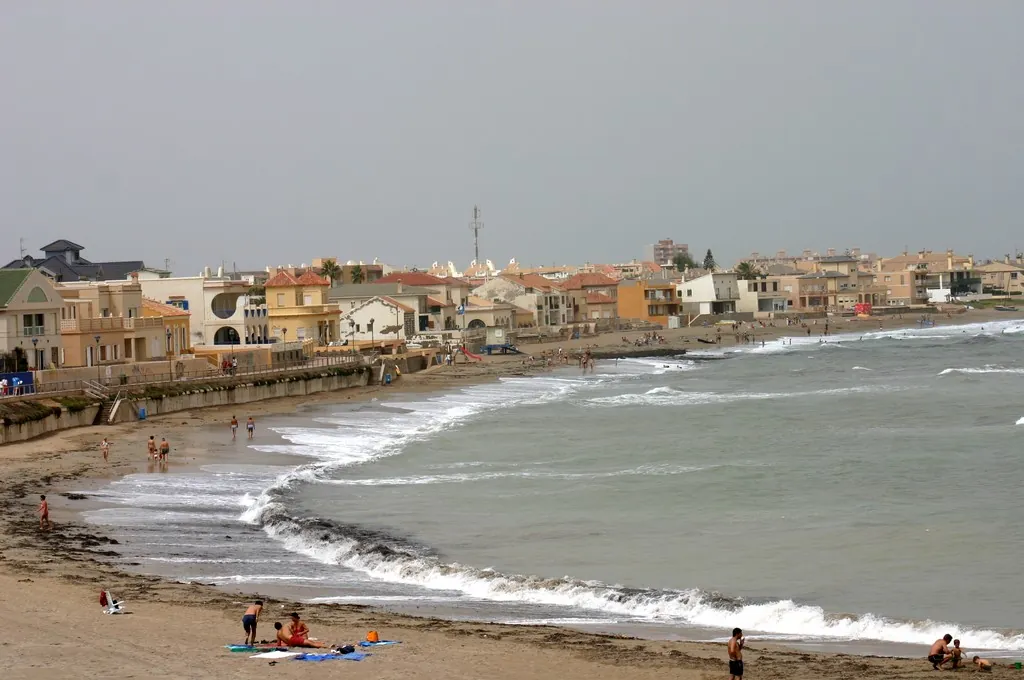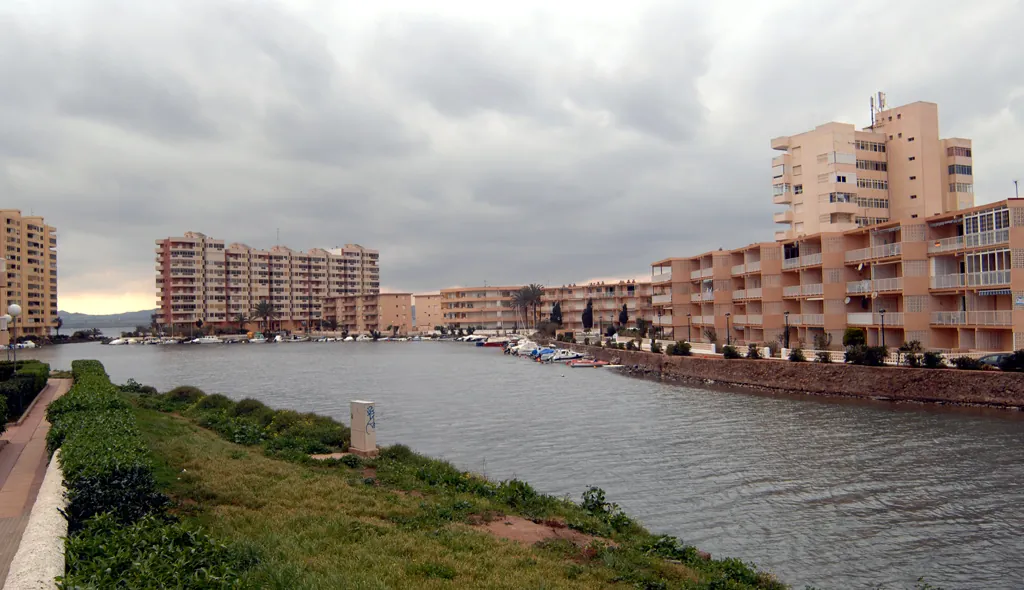
It is one of the classic summer sights on the Mar Menor: people smeared head to toe in grey mud, standing in the sun, waiting for it to dry before washing it off in the lagoon. But if you are staying in La Manga, you should know you will not see that on your beach. The famous mud is at the other end of the Mar Menor, in Lo Pagán (San Pedro del Pinatar).
Here is what they are, exactly where they are, how to use them, what precautions really matter and what the Mar Menor is like this 2026.
Quick fact
According to a 1995 study by the University of Murcia cited by the Ayuntamiento de San Pedro del Pinatar, the mud in the area has a basic pH, between 7,12 and 8,45, and a higher proportion of calcium, magnesium, potassium, chlorides and sulphates than expected, even for such salty water.
What the Mar Menor mud is
They are very fine sediments, silts and clays, that have built up over centuries in the shallow parts of a very salty lagoon with lots of sunshine. The mud people use comes from the bottom of some ponds next to the salt pans, not from the seabed of the beach.
The council leaflet «Un mar de salud» credits this mud with benefits for the skin and joints. It's worth reading for what it is, tourist promotion material: there's no official health endorsement saying the mud cures anything. Take it as a pleasant local custom and, if you have a skin condition or a rheumatic problem, talk to your doctor before using it as a treatment.
Where they are: Las Charcas de Lo Pagán
The council identifies «Las Charcas» as the traditional spot, in Lo Pagán, at the end of the seafront promenade next to the Molino de Quintín, an old salt-works windmill. You reach it along wooden boardwalks that run between the ponds, and on the other side of the promenade is the shore of the Mar Menor for washing off. Access is open and free.
From the Molino de Quintín, the La Mota path sets off, separating the salt pans from the Mar Menor and running as far as the Molino de la Calcetera. All of this is part of the Regional Park of the Salinas y Arenales de San Pedro del Pinatar, so do not leave the boardwalks or the marked paths.
And in La Manga? There is no recognised mud area. You may see someone smearing themselves with mud from the shore somewhere on the Mar Menor, but the go-to spot, with boardwalks and a reputation going back decades, is Lo Pagán.
How to use them
There's no hidden science to it. This is the usual way to use it, following the guidelines from the Ayuntamiento de San Pedro del Pinatar itself:
The list
- 1Start with a small patch of skin and wait a while to see if it itches or irritates.
- 2If there's no reaction, spread a thin layer over your body. The council recommends starting with small applications of an hour at most, and only extending them if there are no side effects.
- 3Let it dry in the sun. In summer it dries quickly, which is exactly the point.
- 4Rinse it off with salt water: in the pond itself or by crossing to the Mar Menor shore.
- 5Finish with a fresh-water shower and sun cream, because you'll have been in the sun longer than you think.
Real precautions
What causes the most problems at Las Charcas is not the mud, it is the sun. Sitting still for an hour with no shade at midday in August is a recipe for sunstroke or heatstroke. Go first thing in the morning or late in the afternoon, take water and a cap, and don't leave small children or elderly people to dry off in the midday sun.
Do not put mud on wounds, cuts or burns, or near your eyes. If you are pregnant, have sensitive skin, a skin condition, or heart or blood pressure problems, check with your doctor first: the heat and prolonged exposure are what can disagree with you.
A fact hardly anyone knows: Las Charcas is not a monitored bathing area. In the 2026 list of bathing areas from the Environmental Health Service of the Region of Murcia, San Pedro del Pinatar has La Mota, La Puntica and Villananitos beaches on the Mar Menor, but not the pools. You can check the test results for each beach on MurciaSalud.
How the Mar Menor is doing in 2026
The regional government publishes daily data on the lagoon on the Canal Mar Menor. On 13 October 2026 it showed chlorophyll of 0,84 mg/m³, oxygen of 5,13 mg/l, 3,67 metres of transparency, 24,3 °C and salinity of 42,7. In July the regional government described the ecosystem as stable, with values similar to the previous year's.
That does not mean it has recovered. A study by the Spanish Institute of Oceanography (IEO-CSIC) and the University of Murcia, published this summer, documents the so-called «white patch»: around 12,3 km², roughly 9 % of the lagoon, with water clouded by calcite microcrystals, and a core of 6,7 km² where the seabed vegetation has disappeared. In May the IEO itself described episodes of oxygen depletion at the bottom of the southern basin. None of these sources mentions any risk to bathers, but if you are going to try the mud or have a swim, it is worth checking the Canal Mar Menor that same day.
How to get to Lo Pagán from La Manga
By car it is about 50 kilometres and between 40 and 50 minutes, depending on which kilometre you leave from. Although on the map it looks right next door, there is no way through from the north of La Manga: the road ends before Las Encañizadas, so you have to leave by the southern entrance to La Manga and go round the lagoon on the motorway. From Puerto Tomás Maestre it takes a little longer than from km 3. You will find more travel options in how to get to La Manga.
If in the end you would rather stay close by, the Mar Menor is just as enjoyable without the mud: in the La Manga beach guide you have the lagoon beaches stretch by stretch.
Frequently asked questions
Are the Lo Pagán mud baths free?
Yes. Las Charcas is a public space inside the regional park, with no entry fee or opening hours.
What time of year can you do them?
All year round, but the mud only dries properly in heat and sunshine, so the real season runs from late spring to early autumn.
More Mar Menor: Los Urrutias and Playa Paraíso.